What it is
Low back pain is soreness or stiffness between the bottom of your rib cage and the top of your legs. Most of it is what we call non-specific: it is unlikely to come from an infection, a fracture or a disease, and it often gets better on its own. Sciatica is different. The sciatic nerve runs from your lower back to your feet, and when it is irritated or compressed you feel it in your bottom and down the back of one leg, often into the foot. Back pain on its own is probably not sciatica, whatever you have read.
Your first assessment
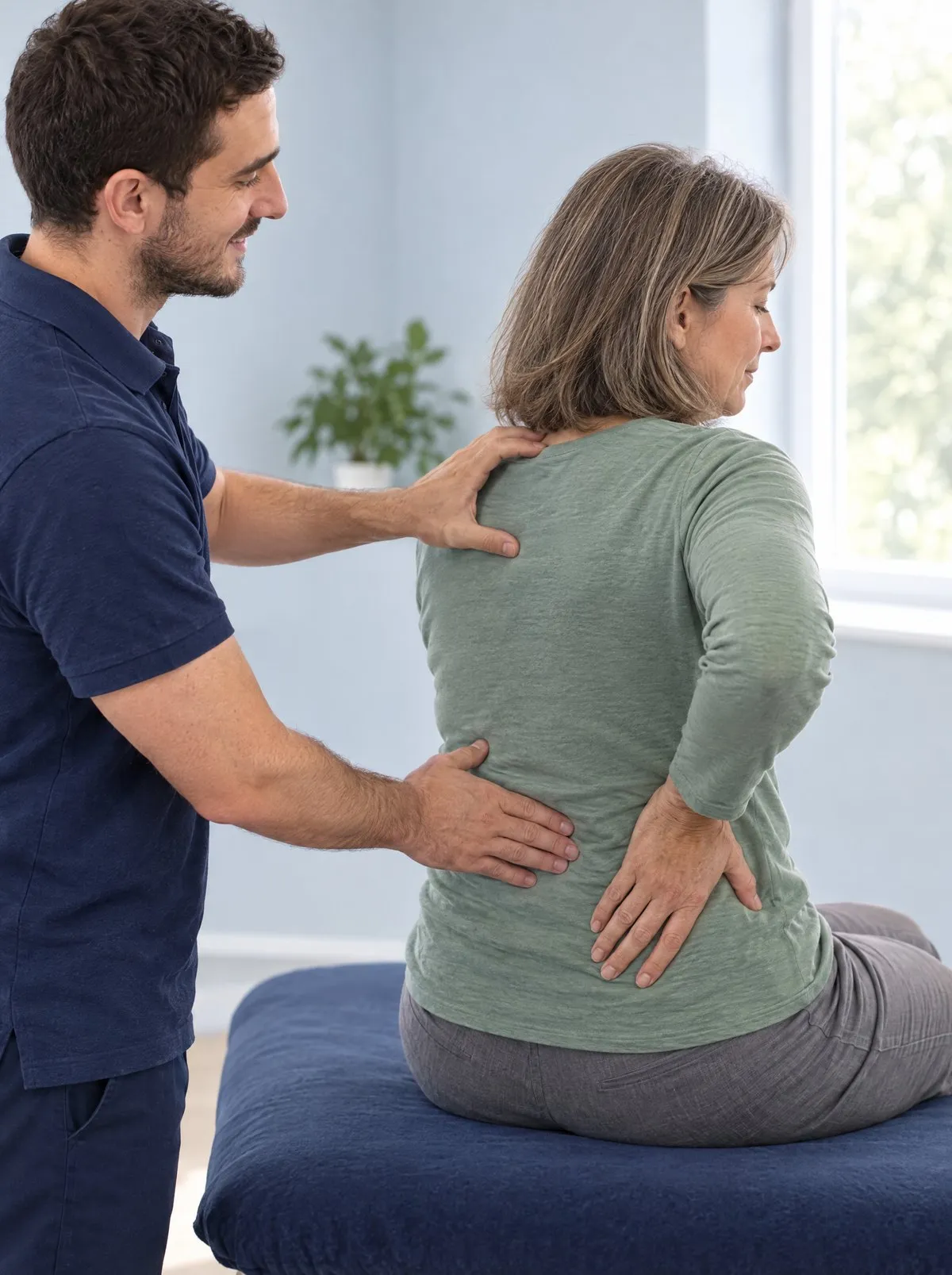
I start with questions about the pain, your general health and any medication, then I examine you. Part of that is checking for signs of anything that needs a doctor rather than an osteopath. You do not need a scan first; imaging is not routine for low back pain or sciatica, and in most cases it would not change what we do.
What a plan usually involves
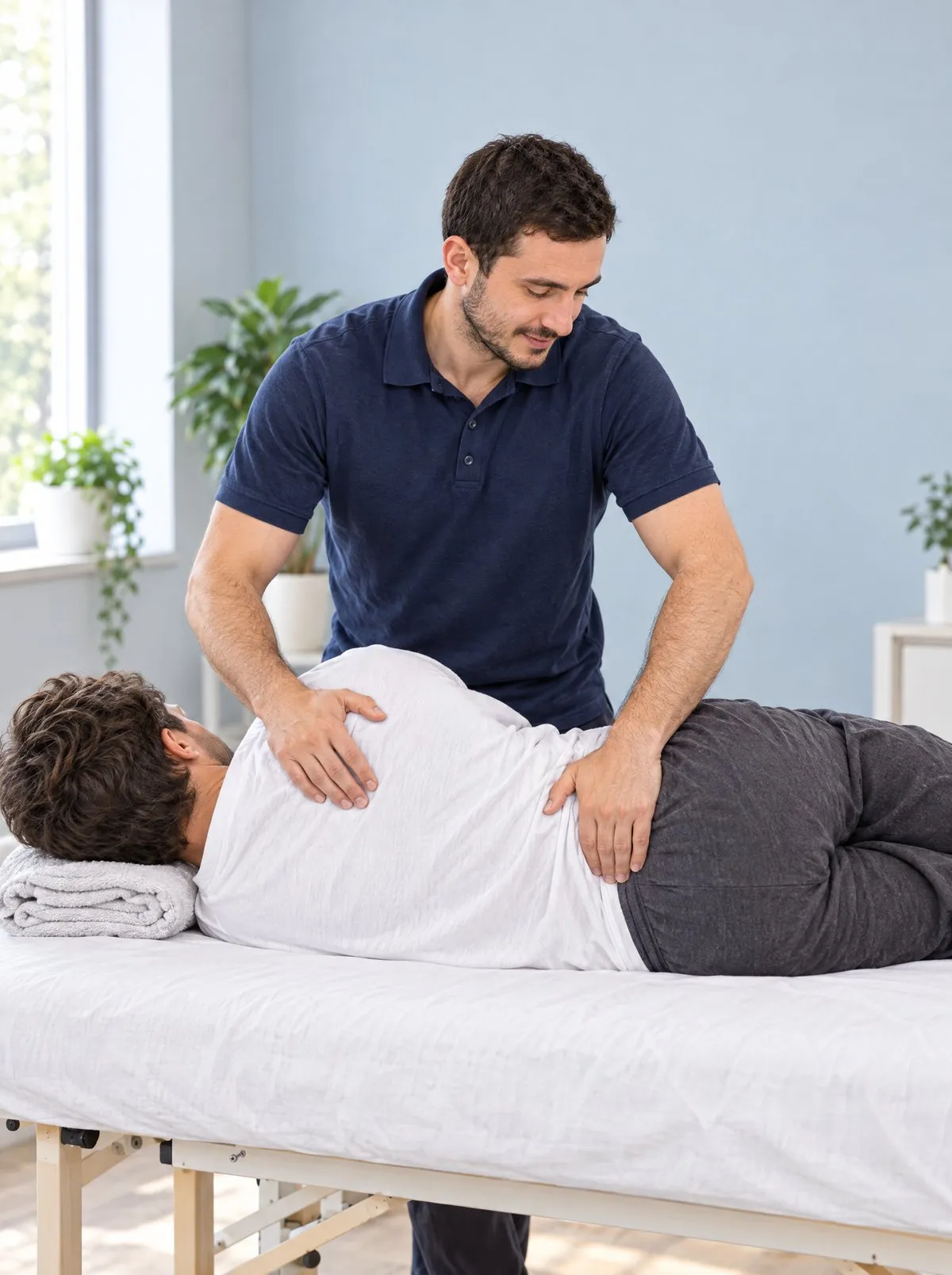
Find what is driving the pain and settle it with hands-on treatment. Every plan I build combines hands-on treatment with movement-based rehabilitation and education, because hands-on work for a back only holds if you also move it. Back pain usually improves within a few weeks, and sciatica usually takes a few weeks to a few months. After your first appointment I give you a realistic estimate of how many sessions you may need.
When a doctor needs to be involved
If something about your symptoms worries you, see a GP or call 111 first.
No GP referral needed. If your assessment shows you need imaging, an injection or a specialist opinion, I refer you directly to a sports and exercise medicine doctor, and your osteopathic care continues with me.